















The cobbles of Weatherfield have long been a stage for profound human drama, and lately, few characters have navigated a more heart-wrenching path than Asha Alahan. Viewers have witnessed her grappling with an almost unbearable weight of panic, guilt, and the relentless pressure to maintain a facade of normalcy. Just as it seemed the cracks were about to give way entirely, an unexpected conversation—with an even more unexpected confidante—has emerged as a pivotal moment, offering a beacon of hope amidst the storm.
The Weight of Unspoken Trauma: Asha’s Recent Ordeal
Asha’s recent weeks have been nothing short of a gauntlet, starting with the deeply disturbing racist incident at her workplace. This vile encounter left her not only shaken but profoundly questioning her own sense of security and self-worth. The trauma was exacerbated by a chance, unsettling run-in with the same perpetrator on the streets of Weatherfield, reigniting a torrent of distressing emotions she had desperately tried to suppress. Despite her efforts to project an image of resilience, a smile often masking deeper anguish, her internal struggle was palpably evident to those who truly paid attention.
At the bustling quad’s birthday party, Asha attempted to immerse herself in the festivities, keeping busy and striving to appear unaffected. However, her efforts were transparent to the ever-observant Bernie, who possessed an uncanny ability to perceive the unspoken pain beneath Asha’s forced cheerfulness. This public display of feigned normalcy only amplified her private torment, underscoring the isolation she felt even when surrounded by loved ones.
Behind the Smile: Unraveling Asha’s Emotional Turmoil
As the party continued, Gemma Winter, with her characteristic vibrant energy, tried to inject some levity into the atmosphere. Her usual jokes, while well-intentioned, couldn’t penetrate the thick cloud of despair enveloping Asha. Quietly, almost imperceptibly, Asha slipped outside, an urgent need for space and solitude overriding any desire to participate. Gemma, sensing the depth of Asha’s distress, followed her, demonstrating a rare and profound moment of empathy. It was here, away from the prying eyes and the celebratory din, that Gemma made a confession seldom seen from her: she candidly spoke about her own long-standing battle with depression.
Gemma’s vulnerability was a powerful gesture, a genuine attempt to bridge the gap between their experiences and reassure Asha that she was not navigating this arduous journey alone. It was a poignant reminder that even the most seemingly effervescent individuals can harbor hidden struggles. [[IMG1]]
When the Past Collides: Asha’s Gripping Panic Attack
Despite Gemma’s heartfelt disclosure, Asha’s emotional landscape remained precarious. A subsequent voicemail from Bernie, intended perhaps as an update or check-in, inadvertently triggered a cascade of terrifying flashbacks. These were not just fleeting memories but vivid, visceral replays of the abuse she had endured, each one hammering at her already fragile psyche. The onslaught was overwhelming, pushing her beyond her breaking point, and that’s when the panic, a primal and suffocating force, truly took hold. Her breath became shallow, her world narrowed, and an intense sense of impending doom enveloped her.
Just as the weight of it all became unbearable, a new, calming presence entered the scene: Maggie Driscoll. With an aura of remarkable composure, steadiness, and profound kindness, Maggie approached Asha in a manner unlike anyone else had managed. Her quiet arrival was like a gentle ripple in a stormy sea, offering the first glimmer of respite.
An Oasis of Calm: Maggie Driscoll’s Gentle Intervention
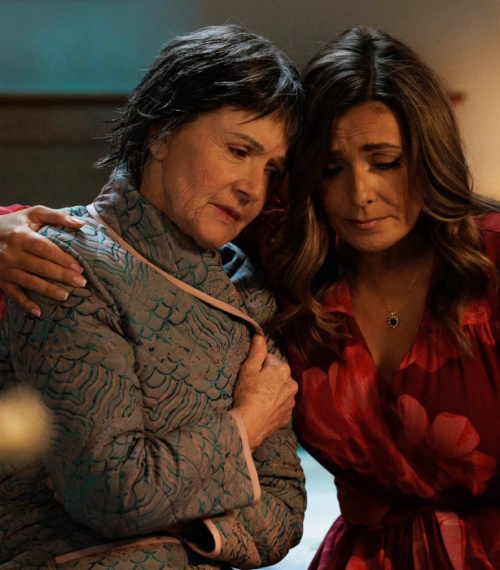
Maggie’s approach was remarkably devoid of the usual well-meaning but ultimately overwhelming questions. She didn’t bombard Asha with inquiries about what was wrong or what had happened. Instead, she simply sat beside her, a quiet anchor in Asha’s tempestuous internal world, and softly instructed her to breathe. This simple, yet incredibly powerful directive, seemed to cut through the noise, providing Asha with a focal point and a gentle pathway back to her own body. That alone, the sheer act of being present and offering a practical coping mechanism, appeared to make a profound difference.
Slowly, haltingly, Asha began to articulate the depth of her despair. She confessed how lost she felt, how her once vibrant confidence had completely evaporated, leaving her feeling like a stranger in her own skin. Maggie listened with unwavering attention, her silence an invitation for Asha to unravel her pain without judgment. Then, with a quiet conviction, Maggie offered a statement that resonated deeply within Asha, a truth that had been obscured by her suffering: Asha had dedicated her career to helping others navigate their darkest times, and now, it was her turn to extend that same compassion and care to herself.
Finding Her Own Strength: Maggie’s Profound Words
Those words landed with the weight of revelation. For the first time in what felt like an eternity, Asha began to perceive her situation, and herself, through a different lens. She grasped the vital understanding that she didn’t need to conceal her pain, nor did she have to maintain the exhausting pretense of being fine. Her task, Maggie implicitly suggested, was not to escape her feelings, but to embrace the essential act of self-care, to nurture herself with the same dedication and empathy she so readily offered to others. This shift in perspective was monumental, marking the beginning of her journey towards acknowledging and addressing her emotional wounds rather than suppressing them.
When Dev, her father, and Bernie arrived on the scene with paramedics, Asha was undeniably still shaken by the preceding events, but a discernible calm had settled over her. She looked at her dad, a figure who had always sought to protect and ‘fix’ her, and articulated a profound truth: she didn’t need rescuing. What she needed, what she truly craved, was his unwavering support. This assertion was a monumental step, a declaration of her burgeoning autonomy and a testament to the powerful impact of Maggie’s guidance. [[IMG2]]
A New Dawn: The Enduring Impact of Maggie’s Wisdom
In the wake of that transformative moment, a subtle yet profound shift has taken root within Asha. While her healing journey is undeniably ongoing and complex, she carries herself with a newfound lightness, a deeper sense of grounding. Maggie’s perceptive words have become a steady anchor for her, offering a precious fragment of peace and a renewed sense of control over her own narrative. This isn’t an overnight cure, but a fundamental reorientation towards self-compassion and resilience.
Dev, too, appears to be undergoing his own quiet evolution. For years, his paternal instincts have been geared towards immediate intervention and fixing any problem Asha faced. Now, he is beginning to grasp a more nuanced understanding of true support – one that involves empowering Asha to forge her own path, to discover her own solutions, rather than imposing his. This represents a quiet but incredibly powerful recalibration of the dynamics within their father-daughter relationship, moving from paternalistic protection to genuine, respectful encouragement.
Beyond the Cobbles: Coronation Street’s Authentic Portrayal of Mental Wellness
Maggie Driscoll’s unexpected presence feels like precisely what Weatherfield, and perhaps its residents, desperately needed: a figure of quiet wisdom, remarkable strength, and understated calm. Her burgeoning friendship with Asha has the potential to blossom into one of the most resonant and meaningful storylines seen on the Street in recent memory, highlighting the profound impact a single, empathetic individual can have during another’s darkest hour.
It is truly commendable to witness Coronation Street’s commitment to exploring the intricate nuances of mental health with such honesty and sensitivity. Asha’s deeply personal and raw story serves as a powerful reminder that healing is seldom a linear process; it rarely happens overnight. Yet, it also beautifully illustrates that sometimes, all it takes is one person – saying the right thing, at precisely the right moment – to set someone on the path towards recovery and self-acceptance. This narrative not only enriches the show’s tapestry but also contributes significantly to broader conversations about mental wellness, underscoring the vital role of connection and understanding in overcoming adversity.