













A New Era of Transmedia Storytelling for Bethesda
The landscape of video game adaptations has shifted dramatically in recent years, but few franchises have managed to weave their live-action counterparts into the core gaming canon as seamlessly as Fallout. following the massive critical and commercial success of Amazon Prime Video's Fallout series, Bethesda Game Studios is looking far into the future. In a move that fundamentally changes how the studio approaches narrative continuity, executive producer Todd Howard has confirmed that Fallout 5 will not only acknowledge the events of the television series but effectively bridge the gap between the two mediums.
For decades, Bethesda has operated with a degree of separation between its various media ventures. While lore consistency has always been a priority, the idea of a television show dictating the narrative direction of a flagship RPG is a novel concept for the studio. Howard's recent comments to the BBC suggest a calculated strategy: capitalizing on the "binge-watcher to wasteland wanderer" pipeline. With The Elder Scrolls 6 currently occupying the studio's primary development slot, keeping the Fallout brand momentum alive through the TV series is not just a stopgap measure; it is the new foundation for the franchise's future.
This integration marks a rare instance where a screen adaptation creates canon events that the source material must subsequently adhere to, rather than the other way around.
If Fallout 5 lets me recruit The Ghoul as a companion, it is already Game of the Year. The synergy between the show and the games is exactly what this franchise needed to survive the long wait for a new title.
How the TV Series Redefined the Timeline
To understand the implications of Howard's plan for Fallout 5, one must look at where the Amazon series sits on the timeline. Set in 2296, the show takes place nine years after the events of Fallout 4 and roughly 15 years after Fallout: New Vegas. This places the show at the furthest point in the current canonical timeline. Consequently, any game released hereafter—specifically Fallout 5—must grapple with the geopolitical state of the Wasteland established by the showrunners.
The destruction of Shady Sands and the decline of the New California Republic (NCR) are now fixed points in history. Fallout 5 cannot simply ignore these massive shifts in power dynamics. By committing to the show as canon, Bethesda has locked itself into a specific narrative trajectory. This suggests that the next game will likely take place either concurrently with future seasons of the show or, more likely, in the years immediately following them.
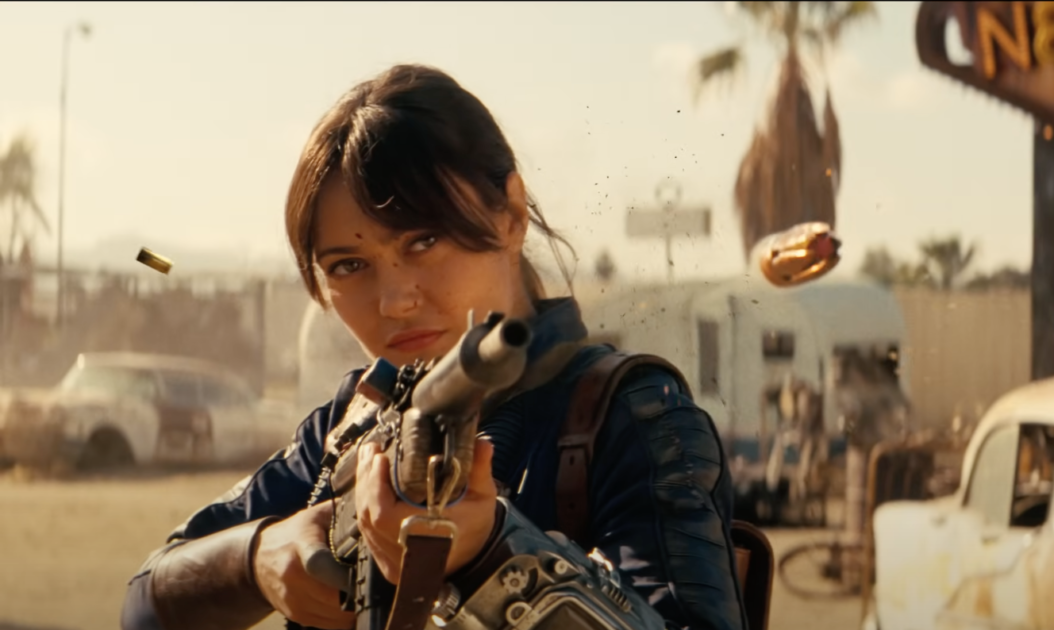
This creates a fascinating narrative constraint for Bethesda. Usually, the writers have a blank slate with each new numbered entry, often jumping decades or moving across the country to avoid dealing with the specific endings of previous games. Now, the "official" state of the world is being broadcast to millions of Prime Video subscribers, meaning the game developers must build their quests, factions, and world-states around the wreckage left behind by Lucy MacLean and The Ghoul.
Character Crossovers: Lucy, Maximus, and The Ghoul
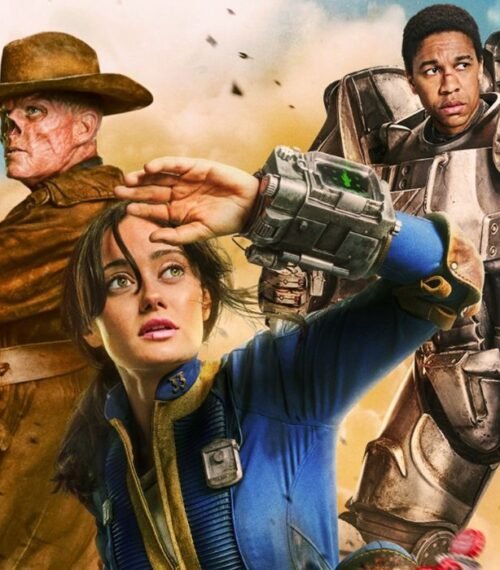
Perhaps the most exciting prospect teased by Howard is the potential for direct character crossovers. The trio of protagonists from the Amazon series—Lucy MacLean (Ella Purnell), Maximus (Aaron Moten), and The Ghoul (Walton Goggins)—have become instant icons within the fandom. Howard's indication that familiar faces could appear in Fallout 5 suggests that these characters will not be contained solely within the linear narrative of the show.
The inclusion of The Ghoul seems the most plausible and lore-friendly option for a crossover.
Given that ghouls possess significantly extended lifespans and Cooper Howard has already survived over 200 years in the Wasteland, he could easily appear in Fallout 5 regardless of when or where it is set, provided he survives the series. His profession as a bounty hunter also makes him an ideal candidate for an NPC role—perhaps a quest giver or a high-level companion similar to Hancock or Charon from previous entries.
Lucy and Maximus present a different challenge. As human characters, their inclusion would tether the game more tightly to the specific timeframe of the show. If Fallout 5 is set in the 2300s, an older, battle-hardened Lucy could serve as a faction leader or a legendary figure, much like Elder Maxson in Fallout 4. This would allow players to see the long-term consequences of her journey, providing a narrative payoff that transcends the television screen.
The Elder Scrolls 6 Factor
While the hype for Fallout 5 is surging, the reality of game development cycles cannot be ignored. Bethesda has made it clear that The Elder Scrolls 6 is their current priority following the ongoing support for Starfield. This places the release of Fallout 5 likely in the late 2020s or early 2030s. This massive gap between mainline entries (Fallout 4 released in 2015) creates a unique reliance on the TV show.
The TV series is effectively carrying the torch for the franchise during this "long winter" of game development. By the time Fallout 5 launches, the show may have run for several seasons, establishing a rich, multi-year narrative that the game will then inherit. This strategy turns the long development cycle from a liability into an asset; by the time players boot up Fallout 5, the world will feel lived-in and historically dense because they have watched the history unfold on television for years.
It is bittersweet knowing we likely won't see Fallout 5 until the next decade, but at least the show is expanding the lore in meaningful ways. It is better than the franchise going dark for 15 years.
Onboarding the "Prime" Generation
The strategic genius behind Howard's plan lies in audience conversion. The Fallout TV series introduced the franchise's unique blend of 1950s retro-futurism and brutal post-apocalyptic survival to a massive general audience who may never have picked up a controller. By explicitly linking Fallout 5 to the show, Bethesda is removing the barrier to entry for these new fans.
If a viewer loves Ella Purnell's performance as Lucy, knowing that her story or legacy continues in the game provides a powerful incentive to purchase a console or PC. This is similar to the "MCU effect," where audiences follow characters across different sub-franchises. Bethesda is betting that the familiarity of the show's tone, humor, and visual language will make the transition to the open-world RPG genre less intimidating for casual viewers.
Furthermore, this integration allows Fallout 5 to skip some of the heavy lifting regarding world-building explanation. Players coming from the show will already understand the Brotherhood of Steel's techno-religious zealotry, the Vault-Tec conspiracy, and the dangers of radiation. This allows the game writers to dive immediately into complex, high-level storytelling without needing to re-explain the basics of the universe.
The Risks of a Shared Universe
However, this convergence of mediums is not without its risks. The charm of the Fallout games has often been their isolation; the Lone Wanderer, the Courier, and the Sole Survivor all had distinct, self-contained stories. By tying Fallout 5 to a linear TV show, Bethesda risks shrinking the universe, making it feel like a "small world" where the same few characters drive all major events across the continent.
There is also the danger of "required reading."
If Fallout 5 relies too heavily on plot points from the TV series, it risks alienating hardcore gamers who might not be interested in the show. The game must stand on its own merits as a deep RPG experience, rather than feeling like interactive promotional material for Amazon Prime. Balancing fan service with a standalone narrative will be the development team's greatest challenge.
Additionally, retcons are a sensitive subject in the Fallout community. The show has already sparked heated debates regarding the timeline of the NCR's fall and the location of Shady Sands. If Fallout 5 doubles down on controversial narrative choices made by the showrunners, it could deepen the divide between "classic" lore purists and the new wave of fans.
Conclusion: The Future is Radiated
Todd Howard's confirmation of a unified canon represents a bold step forward for Bethesda. It signals a future where Fallout is no longer just a series of games, but a cohesive multimedia universe. While the wait for Fallout 5 remains long, the promise of seeing the consequences of the TV show ripple into the gameplay experience is a compelling hook.
As the studio works on The Elder Scrolls 6, the adventures of Lucy, Maximus, and The Ghoul will continue to shape the Wasteland, laying the groundwork for an eventual return to the interactive apocalypse. Whether this gamble pays off depends on execution, but for now, the Vault door is wide open, inviting millions of new fans to prepare for the future.