











The Weight of a Decade-Long Legacy
Stranger Things has never been a show that does things by halves. As we approach the final curtain call of the cultural phenomenon that defined Netflix for nearly a decade, the weight of its own mythology is becoming undeniable. The series has spent years building a complex tapestry of government conspiracies, interdimensional monsters, and coming-of-age drama. Now, in the penultimate batch of episodes for Season 5, the Duffer Brothers are attempting to weave these disparate threads into a cohesive conclusion.
The result is a viewing experience that is equal parts exhilarating and exhausting. The show was originally conceived as a limited series, a standalone homage to the cinema of the 1980s. However, its explosive success required an expansion of the lore that has grown increasingly unwieldy with each passing season. As we dive into these new episodes, it is clear that the creative team is feeling the pressure to explain the inexplicable.
This latest chapter can be distinctly categorized into three structural pillars. First, there is the action, which remains the series' strongest asset. The set pieces are high-octane, visually stunning, and carry the cinematic weight fans have come to expect. Second, there are the character beats, which struggle under the pacing; characters often stop to emote at one another while the apocalypse looms just outside the door. Finally, there is the exposition.
The sheer amount of explaining required to make sense of the last nine years of storytelling is staggering. It feels less like a narrative flow and more like a lore textbook being read aloud.
The Exposition Problem and Robin Buckley
A significant portion of the runtime in these new episodes is dedicated to characters reminding the audience, and each other, exactly what is at stake. The narrative complexity has reached such a fever pitch that the show must pause its momentum to ensure viewers are keeping up. Perhaps the most egregious example occurs in the second episode of this batch.
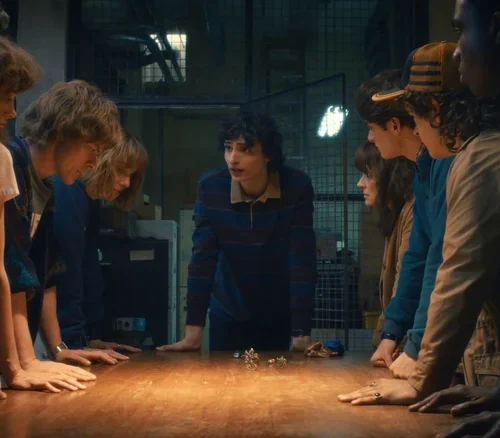
Maya Hawke, reprising her role as Robin Buckley, is tasked with a scene that functions almost entirely as an audience surrogate moment. The action grinds to a halt so that Robin can explain the plot using physical props, breaking down the metaphysics of the threat in a manner that feels designed for a classroom. While Robin's frantic energy is always a delight, the necessity of such a scene highlights a structural issue. When a show needs to stop everything to deliver a lecture on its own plot mechanics, it risks losing the emotional immersion that made it a hit in the first place.
However, for the lore-obsessed fan, these moments are crucial. They provide the connective tissue between the horror of Season 1 and the grand scale of Season 5. The Duffer Brothers are clearly aiming to leave no stone unturned, even if it means sacrificing narrative velocity for clarity.
Major Lore Reveal: The Truth About the Upside Down
The most significant takeaway from these episodes is a massive retcon regarding the nature of the show's central antagonist setting. For years, fans have understood the Upside Down to be a dark reflection of our world, a parallel dimension stuck in 1983. These new episodes upend that understanding completely.
The Upside Down is not just a parallel dimension; it is a wormhole.
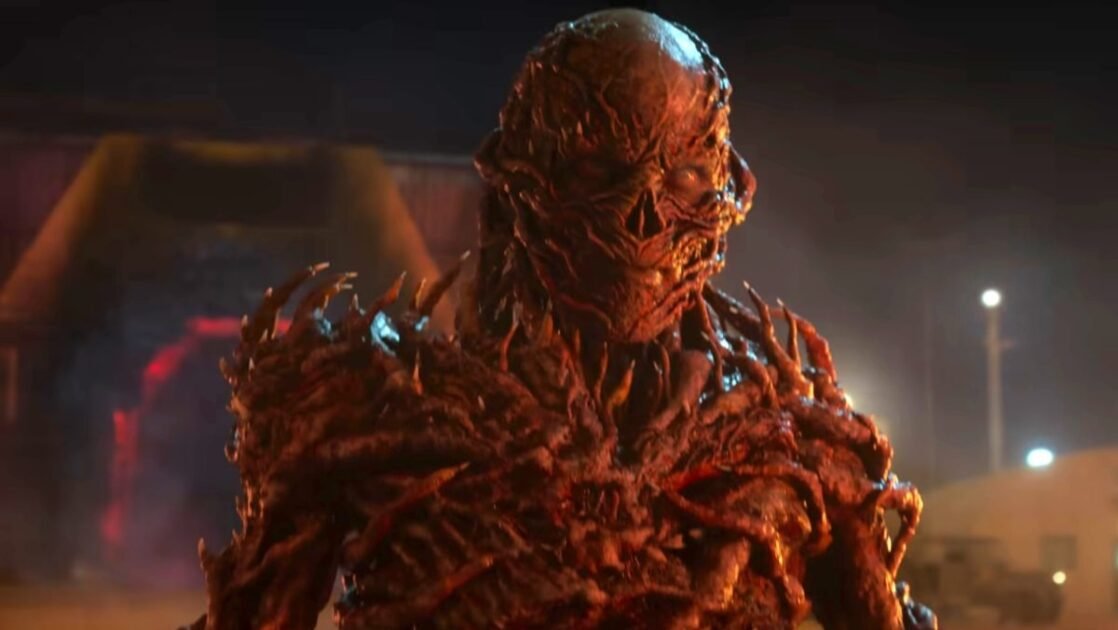
The show reveals that the dark landscape we know is actually a bridge to an even more hostile reality. This shift in mythology recontextualizes Vecna's plan entirely. Vecna, who continues to be a terrifying presence onscreen, is not merely trying to merge the worlds. He is attempting to collapse the wormhole. His goal is to bring about a total intersection of realities that would allow him to dominate the waking world completely.
This revelation adds a layer of cosmic horror to the proceedings. Vecna is no longer just a former human with a grudge; he is a cosmic entity utilizing interdimensional physics to rewrite existence. His visual design remains spectacular, striking a balance between the grotesque and the humanoid, commanding the screen with a menace that feels earned after four seasons of buildup.
Splitting the Party: Geography and Yoghurt
In classic Stranger Things fashion, the ensemble cast is scattered across various locations, both physical and metaphysical. The narrative splits the heroes into distinct groups, each tackling a different aspect of the apocalypse. We have a team operating in the real world, defending Hawkins from the bleeding edges of the Upside Down. Another group is venturing directly into the hostile dimension, taking the fight to Vecna's doorstep.
However, the show introduces even more esoteric locations in this run. There is a secret memory world hidden within the Upside Down, a psychic plane that seems to be the key to saving Max Mayfield. The introduction of this mindscape allows for surreal visuals and emotional storytelling, but it also adds to the confused geography of the season.
Strangest of all is a subplot involving two characters trapped in a room that appears to be slowly filling with a substance resembling organic matter or, as some critics have uncharitably noted, yoghurt. While likely intended to be a claustrophobic body-horror element, it highlights the tonal whiplash the show sometimes suffers from. Balancing high-stakes interdimensional warfare with enclosed, bizarre traps is a difficult juggling act.
The Passage of Time and Production Value
One elephant in the room that the show can no longer hide is the age of its cast. The timeline of the show has moved slowly, but the actors have grown up. The male cast, in particular, has physically matured significantly since the cliffhanger of Season 4. While the show asks us to suspend our disbelief regarding dragons and telekinesis, accepting these actors as the same age they were in previous seasons requires a similar leap of faith.
Despite this, the production value remains top-tier. When Stranger Things aligns its elements correctly, it is virtually untouchable in the realm of television spectacle. The nostalgia factor is deployed with surgical precision, evoking the 1980s without feeling like a cheap parody. The action sequences are choreographed with a sense of geography and impact that rivals major Hollywood blockbusters. On a purely visceral level, the show delivers exactly what it promises: a grand, operatic sci-fi adventure.
The Ensemble Dilemma
The release strategy for Season 5 has been a double-edged sword. By giving audiences time to breathe between batches of episodes, Netflix has inadvertently invited scrutiny. When you watch the show continuously, the momentum carries you past the plot holes. When you stop to think, the cracks begin to show.
The primary issue facing the finale is the sheer size of the cast. As the story hurdles toward its conclusion, one might expect the narrative to tighten. Great dramas like Breaking Bad or The Sopranos spent their final seasons shedding weight, killing off characters or resolving arcs so that the finale could focus entirely on the protagonist. Stranger Things has done the opposite.
The cast list has ballooned to unmanageable proportions. We are tracking the original party, the older teens, the parents, the Russian contingent, and newer additions. This creates a situation where beloved characters often feel sidelined. Winona Ryder, whose portrayal of Joyce Byers was the emotional anchor of the first season, feels dramatically underutilized in these episodes. With so many moving parts, there is simply not enough screen time to give every character the depth they deserve.
The Challenge of the Finale
As we look toward the final episode, the Duffer Brothers have created a massive checklist of administrative storytelling tasks. The to-do list for the finale is daunting:
Defeat Vecna and close the wormhole.
Rescue the children and resolve the fate of Max.
Stop the rogue factions of the military and the evil scientists.
Provide emotional closure for roughly seventeen distinct main characters.
It is a staggering amount of narrative ground to cover in a single finale. The fear among fans is that in the rush to tie up the plot mechanics involving wormholes and dimensions, the emotional goodbyes will feel rushed. Breaking Bad worked because it was the story of one man's end. Stranger Things is trying to be the story of an entire town, a government conspiracy, and a dimension.
We are holding out hope that the extended runtime of the finale will allow for these moments to breathe. If anyone can pull off the impossible, it is this team.
Stranger Things has always thrived on the impossible. It resurrected the career of Winona Ryder, made Dungeons and Dragons cool again, and dominated the streaming landscape for a decade. While the path to the end is cluttered with exposition and an overstuffed cast, the potential for a satisfying, tear-jerking, and triumphant conclusion remains. We will be watching, waiting, and hoping that the final roll of the dice lands on a critical hit.